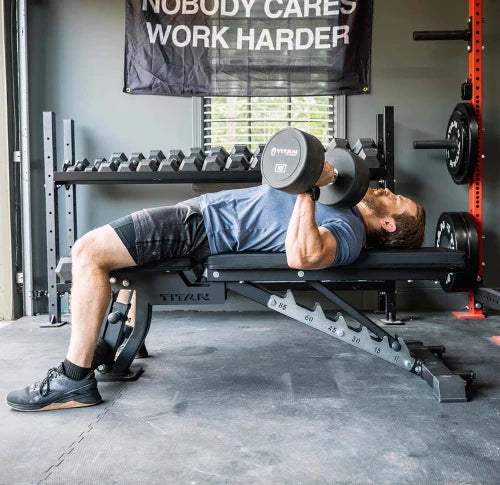
Lift Smarter at Home: Avoid These 5 Common Bench Press Mistakes
A good weight bench is the backbone of any home gym. From heavy bench presses to rows, split squats, flyes, and more, a good bench adds a ton of versatility to your setup, especially if you want to get a lot of bang for your buck in a small space. But a bench only delivers as well as your setup and technique are dialed in. Most people worry about the lift itself, but a lot of the biggest bench press mistakes happen before the bar ever leaves the rack. The good news? Most of these slip-ups are easy fixes that instantly make your lifts safer, stronger, and more effective. Keep reading for five of the most common bench press mistakes and how to fix them.

1. Poor Bench Positioning in the Rack
One of the easiest but most overlooked ways to throw off your press is not lining your bench up right. If it’s too far forward, too far back, or off-center, your bar path gets weird fast. That means your lifts are less efficient and even unstable. You might feel like you’re reaching for the bar, fighting to unrack it cleanly, or drifting into awkward angles that throw off your power.
How to avoid it: First check that your bench is centered and sitting flat. Then lay down and look straight up. The bar should be right above your eyes (or nose area depending on your lift). The goal is to have the bar over your midline/chest when you unrack and press. This small adjustment pays off big once you start pressing.
It’s also a good idea to check that your bench hasn’t shifted between sessions and adjust as needed. Putting tape on the floor as indicators once you find the right setup can save a lot of time down the line.

2. Using an Unstable or Worn-Out Bench
A wobbly bench is a fast track to bad reps. Not only is it unsafe, if the frame flexes or the whole thing rocks when you’re using it, you end up fighting the bench instead of focusing on the lift. A lot of lifters blame their form for not progressing, but the real issue may be that their bench isn’t stable. Your bench is the foundation of your bench presses. If your foundation is unstable, your presses are going to suffer and it’s going to be harder to control the bar.
How to avoid it: Choose a bench with a solid steel frame, stable footing, secure bolts, and firm padding that doesn’t collapse under load. Check the weight capacity and make sure it’s built to handle your training long-term. If your bench rocks when you sit down or shifts when you press, it’s time for an upgrade.
Titan Fitness offers sturdy flat benches and adjustable benches with reliable frame construction and high capacity ratings so your setup stays locked in from the moment you grab the bar.

3. Incorrect Grip Width and Wrist Alignment
It’s easy to get caught up in adding pounds or reps when it comes to making progress, but mastering the basics like grip width have a huge impact on whether you stall out or keep building strength. Go too wide and your shoulders take the hit. Too narrow and your elbows flare or tuck in weird ways that ruin your leverage. Pair that with bent-back wrists, and you’ve got a recipe for shaky reps and inconsistent power.
How to avoid it: Start with a grip just outside shoulder width and use the knurl marks to keep things even. When you wrap your hands around the bar, keep your wrists stacked above your elbows instead of letting them fold back. It should feel solid and repeatable every single time.

4. Letting the Lower Back Over-Arch
A natural arch is part of good benching. A massive, exaggerated arch isn’t. This is one of the most overlooked bench press mistakes because people think a bigger arch means a stronger press. In reality, going too far puts stress on your lower back, throws off your leg drive, and makes the whole setup unstable.
How to avoid it: Lie on the bench and pinch your shoulder blades together, lifting your chest slightly toward the bar while keeping your hips on the bench. There should be a small gap under your lower back. Plant your feet and push slightly into it to engage your legs without lifting your hips and pull your shoulder blades down and back to lock in your upper back. Maintaining a natural arch should feel light and comfortable. If you’re straining to arch, it’s too much.
5. Training With a Bench That Doesn’t Match Your Rack
Here’s one that’s easy to miss. If your bench is too tall, too narrow, or the wrong width for your rack, you end up struggling to unrack, drifting into awkward bar paths, or dealing with setups that never feel the same twice. It’s subtle issue, but creates a ripple effect across an entire lift.
How to avoid it: The easiest way to make sure your bench matches your rack is to choose them from the same brand line. If not, you’ll need to check the height, width, and frame footprint of your bench. Test compatibility with a dry unrack: the bar should sit roughly over your mid-chest after you unrack, your feet should fit comfortably without angling awkwardly, and you should be able to grip the bar evenly without leaning or overreaching.
Looking for benches and racks that are made for each other? Check out our T-2, T-3, or X-3 rack lines for consistency under heavy weight.
Explore Our All-New Bench Line
Check out this video to see what separates a solid bench from one that holds you back. We’ll walk through Performance, Elite, and TITAN Series benches, including flat, adjustable, and FID models, so you can choose the one that fits your space, your style, and the way you train.

Eliminate Common Bench Press Mistakes With the Right Setup
Most problems come down to small habits or equipment that isn’t keeping up with your training. Clean up these common bench press mistakes and get the right setup for your space and your reps will feel smoother, your setup will be tighter, and your progress will become a lot more consistent.
If you’re ready to upgrade your setup, take a look at Titan Fitness benches, racks, and accessories for sturdy frames, consistent dimensions, and options for every training style.
Shop All BenchesFrequently Asked Questions About Common Bench Press Mistakes
What’s the best way to improve my bench press setup?
First, make sure your bench and rack work well together. Then make sure you have the basics covered: position your bench correctly in the rack, keep your grip consistent, and avoid letting your lower back over-arch.
What type of bench is best for home training?
A stable flat or adjustable bench with a solid frame, firm padding, and a weight rating high enough for your goals is ideal. Titan Fitness offers several options, from basic flat benches to Performance, Elite, and TITAN Series adjustable models.
What type of bench is best for home training?
A stable flat or adjustable bench with a solid frame, firm padding, and a weight rating that lets you continue to progress is ideal. Titan Fitness offers several options, from basic flat benches to Performance, Elite, and TITAN Series adjustable models.